RFQ-ready sourcing:Upload BOMSend drawingsDownload datasheets24h response target
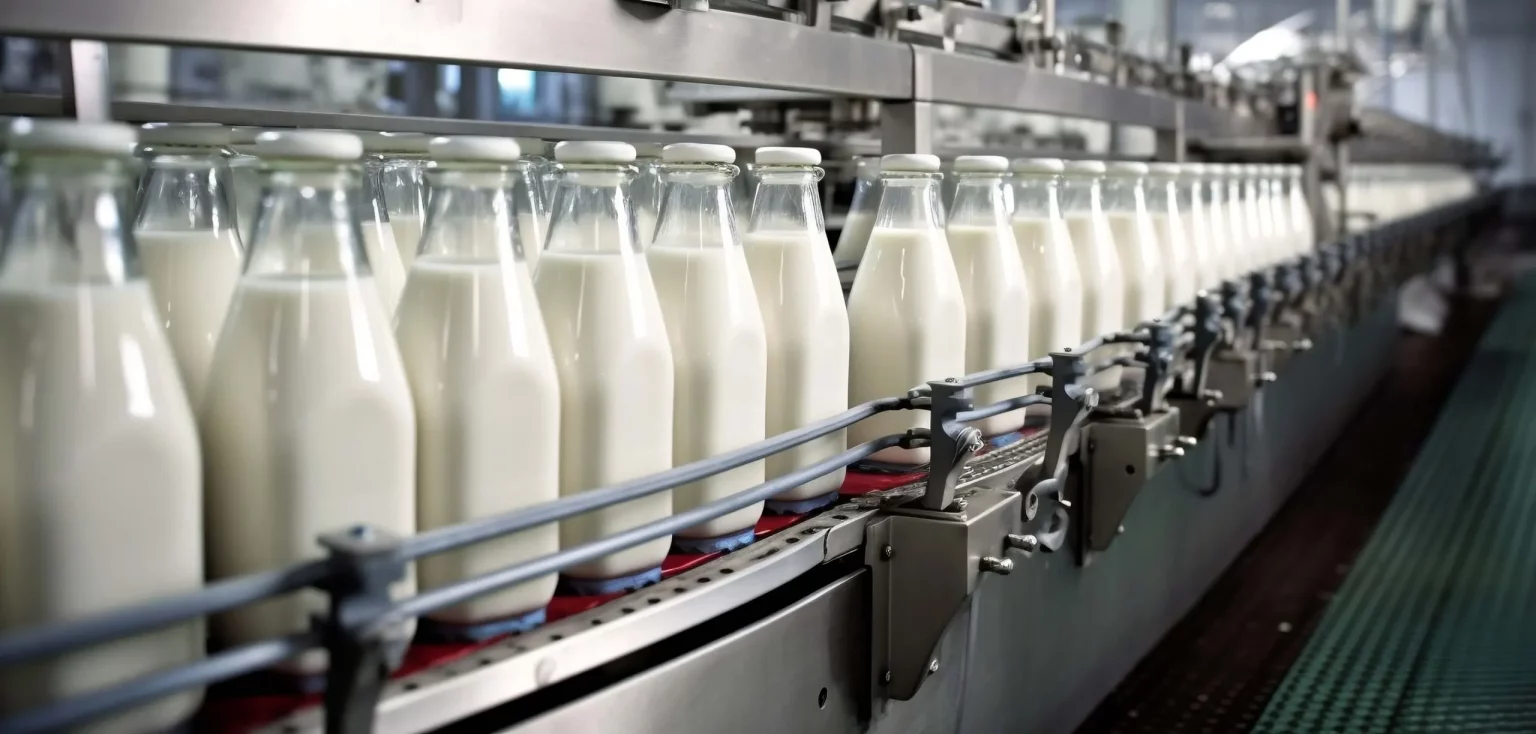
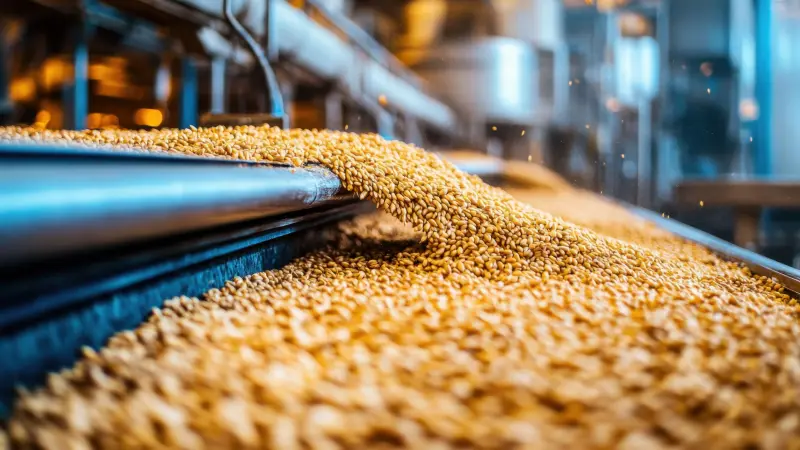
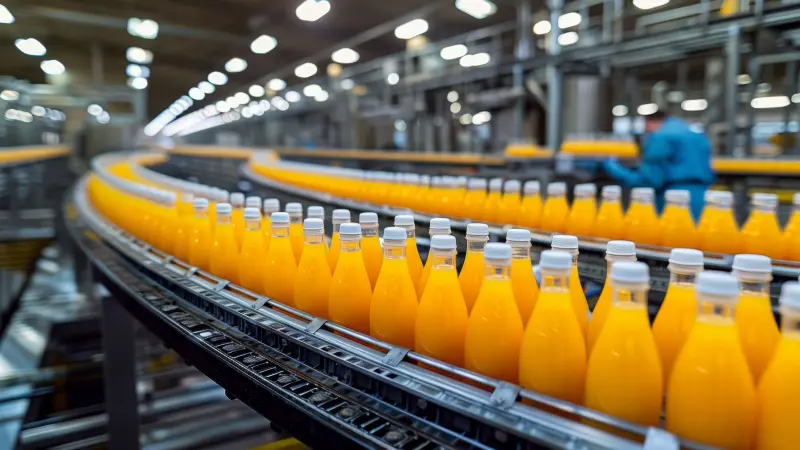
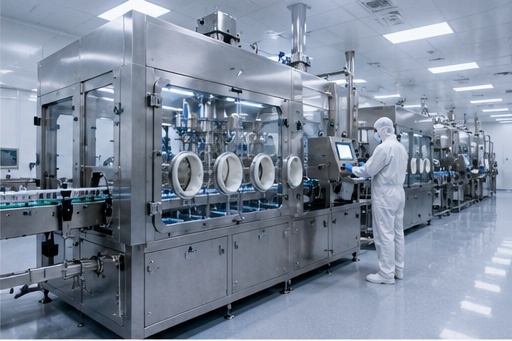
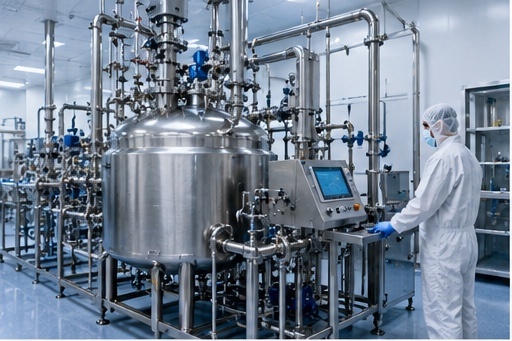
Dairy processing lineDairy ProcessingPasteurizers, CIP systems, transfer lines Food processing lineFood ProcessingSanitary fittings, valves and tubing Beverage bottling lineBeverage LinesBottling, mixing and hygienic transfer Pharmaceutical clean process linePharmaceuticalHigh-purity 316L and documentation Biotechnology stainless process systemBiotechnologyBioreactors, skids and cell culture support OEM contractor stainless process systemOEM / ContractorsProject RFQ support and secondary supply
Application support:Send project listTalk to sourcingCanada-focused supply
Documentation support:DatasheetsMTR / material requestSpec-first communication
Datasheets
About
Contact
Request a Quote
01Category
02Subcategory
03Product Detail
04Datasheet + RFQ
Sanitary Valves

Mixproof & Divert Valves

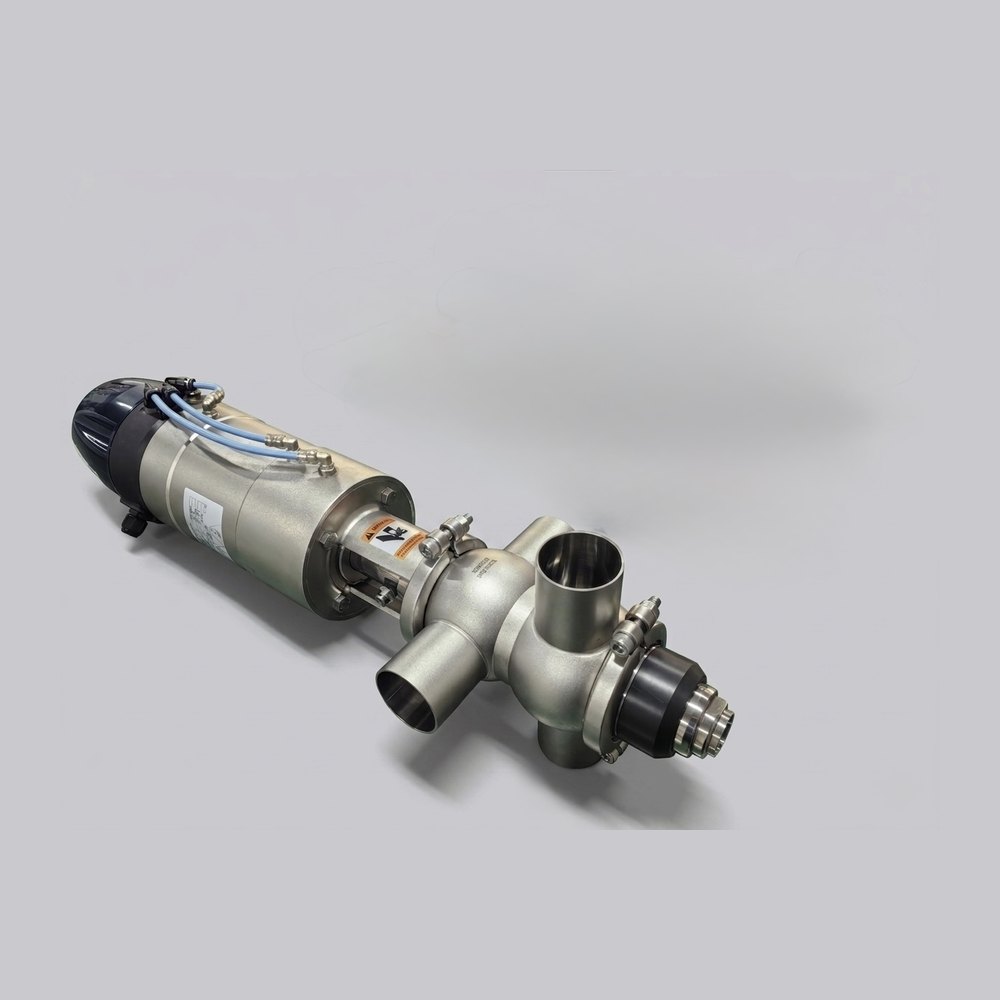
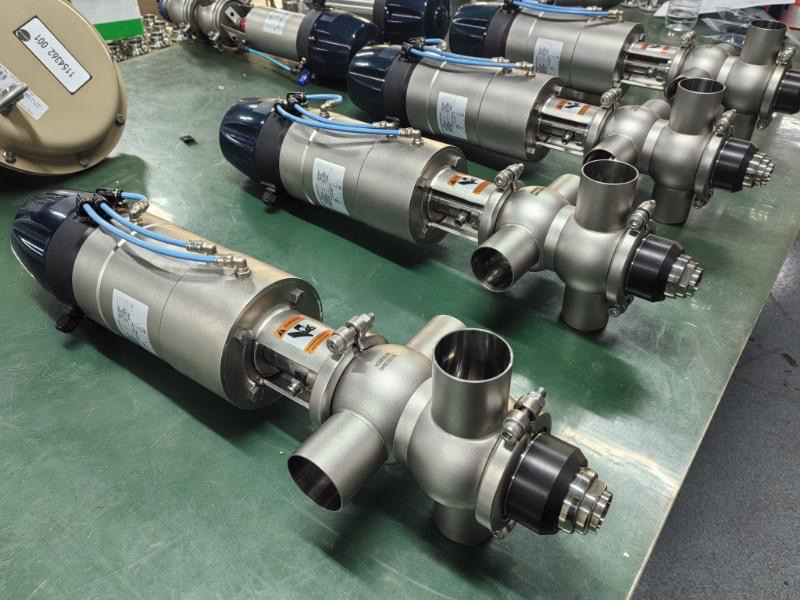
Mixproof and divert valve concepts for complex routing, product separation and automated sanitary process plants.

Divert and mixproof conceptsActuation and control head optionsProject-based review recommendedUseful for integrators and process contractors

Sizes & Dimensions

Standard mixproof valve sizes.

Double-seat configuration prevents mixing of two products through independent plug seals. Pneumatic actuation with seat-lift for CIP.

NominalDNOD (mm)Cv (path)Air conn.Weight (kg)Type
2"DN5077.585¼" NPT12Double-seat
2½"DN6591.0135¼" NPT15Double-seat
3"DN80104.0220¼" NPT19Double-seat
4"DN100119.0380¼" NPT28Double-seat
5"DN125130.0580¼" NPT38Double-seat
6"DN150168.0850¼" NPT52Double-seat

Operating Conditions

Pressure-temperature rating for mixproof valves.

Two independent plug seals with leakage chamber to atmosphere. Seal material determines operating range.

EPDM Seals Viton FKM Temperature (°C) Pressure (bar) -20 24 68 112 156 200 0 2 5 8 11

Service Conditions

  • Max working pressure: 10 bar
  • EPDM seals: –40°C to +140°C
  • Viton seals: –20°C to +200°C
  • Steam SIP: +135°C compatible
  • Air supply: 5 – 7 bar clean dry air
  • Leakage detection: Atmospheric drain visible

Actual ratings depend on size, material and operating conditions. Confirm via RFQ for project-specific requirements.

Standards & Compliance

Built to recognized sanitary and pressure standards.

Full documentation packages available including MTR, 3.1 certificates, surface roughness reports and pressure test records.

3-A 74-07

3-A Sanitary Standard

Sanitary equipment for milk and milk products processing.

EHEDG Class I

Mixproof Equipment

Hygienic mixproof valve class I certification.

ASME BPE

Bioprocessing Equipment

Surface finish, materials and design for pharma/biotech.

ISO 5211

Actuator Mounting

Standardized actuator mounting for automation.

FDA 21 CFR

FDA 21 CFR 177

Food contact materials compliance for seats and seals.

EC 1935/2004

Food Contact

EU regulation on food-contact materials.

ATEX

Hazardous Areas

Explosive atmosphere directive for actuators.

DIN 32676

Tri-Clamp Connections

Dimensional standard for tri-clamp fittings.

Product Variants

Mixproof Valve configurations for different process roles.

Multiple variants available to match your application requirements. Browse related products for complete process line coverage.

Standard Mixproof

Standard Mixproof

Two-seat valve with leakage chamber for product/CIP separation in tank manifolds.

Request quote →
With Seat Lift

With Seat Lift

Pneumatic seat-lift for CIP cleaning of seat seal areas during automated wash cycles.

Request quote →
Mixproof Tank Outlet

Mixproof Tank Outlet

Tank-bottom mixproof for vessel outlets requiring product/CIP isolation.

Request quote →
Manifold Block

Manifold Block

Multi-valve manifold blocks with integrated mixproof valves for compact installations.

Request quote →

Technical Datasheet

Download the product-specific RFQ datasheet.

This PDF summarizes typical sizes, materials, standards, application notes and RFQ inputs for Mixproof Valves. Use it as a preparation document before sending a quotation request.

Download PDF Datasheet

Engineer / Contractor RFQ Support

Send this item as part of a project package, BOM or comparison quote.

For accurate sourcing, include size, connection type, material grade, finish, quantity, pressure/temperature conditions, certificates required and target delivery timing.

Technical RFQ Guide

Specification points to confirm before quotation.

These are typical sourcing fields. Final availability and compliance should be confirmed against the exact project requirement.

Valve function
Divert, mixproof or routing valve by requirement
Material
316L commonly requested
Connections
Clamp/weld and DIN/ISO/SMS options
Control
Pneumatic actuator and feedback/control head options
Seat/seal
Application-dependent elastomers
Documentation
Application review strongly recommended

Applications

Where this product is typically used.

Dairy processing plants

Relevant for sourcing discussions, project BOMs and maintenance replacement needs.

Beverage routing systems

Relevant for sourcing discussions, project BOMs and maintenance replacement needs.

CIP / product separation

Relevant for sourcing discussions, project BOMs and maintenance replacement needs.

Automated process manifolds

Relevant for sourcing discussions, project BOMs and maintenance replacement needs.

Technical Product Layout

Mixproof & Divert Valves — technical sourcing profile

Structured for engineers, contractors and plant buyers who need a clear RFQ-ready technical view before requesting pricing.

Technical Overview

Mixproof and divert valve solutions for complex hygienic routing, separation of product streams and automated process changeover.

Applications

  • Dairy routing matrices
  • Beverage processing lines
  • CIP/product separation
  • Automated production skids

Material Grades

  • Body: SS316L commonly requested
  • Seals: EPDM / FKM / PTFE options
  • Actuator: pneumatic control package
  • Feedback / control top by project

Surface Finish

Sanitary polished internal contact surfaces; leakage chamber and cleanability requirements must be defined.

Standards

  • 3-A oriented hygienic design discussion
  • FDA-style elastomer options
  • Automation and feedback standards by plant
  • CIP/SIP compatibility discussion
Pressure / TemperatureDepends on valve model, seat lift design, actuator package and process temperature.
Connection TypesCommon RFQ connection formats are listed below. Final connection selection depends on plant standards and equipment interface.
Tri-ClampWeld endDIN / ISO / SMS style endsControl air / feedback connections

Related Products

Use these products to build a complete RFQ package around this item.

RFQ note: Values on this page are sourcing guidance only. Final model, pressure rating, temperature rating, certificates, elastomer compatibility and compliance must be confirmed against the exact supplier datasheet and project requirement.

Contractor & Plant Buyer RFQ

Need a contractor-ready quote package or BOM support?

Send line sizes, connection standards, material grade, finish, quantity, photos/drawings and required delivery timing. We help turn unclear product needs into a cleaner RFQ package for supplier comparison.

Engineering Documentation

Technical Datasheet Available

Download the product datasheet for technical specifications, dimensional references, material data, applicable standards and RFQ guidance. Suitable for procurement, engineering review and project documentation.

CE
CASPIAN EDGE
DATASHEET
Product Documentation
Mixproof Valves Datasheet
Material 304 / 316L Stainless Steel
Standard 3-A / ASME BPE / ASTM
Surface Finish Ra ≤ 0.8 μm (ID)
Documentation MTR / QC by RFQ
PDF DATASHEET ↓ Download

Common Questions

Frequently asked questions about mixproof valves.

Engineering and procurement questions we hear most often. For project-specific guidance, send your application details via RFQ.

What is a mixproof valve and why use it?

A mixproof valve has two independent plug seals with a leakage chamber between them. If one seal fails, leaked product flows to atmosphere rather than mixing with the other product.

Essential for tank outlets, manifolds and multi-product systems where cross-contamination must be physically prevented. Critical for dairy plants with multiple SKUs.

How does the leakage chamber work?

The chamber between two plug seals is vented to atmosphere via a drain port. Any seal failure results in product flowing to drain instead of contaminating the other line.

The drain must be visible and unobstructed during operation. Many installations connect the drain to a leakage detection sensor for automatic alarm.

What is seat-lift and why is it needed?

During CIP cycles, brief pneumatic lifting of each seat (1–2 seconds) exposes the seal contact area to CIP fluid for cleaning. Without seat-lift, the seal area cannot be cleaned.

Seat-lift is essential for ASME BPE and 3-A compliance in dairy and pharmaceutical applications. Standard for sanitary mixproof valves.

Are mixproof valves required for HACCP?

HACCP requires demonstration of contamination prevention. Mixproof valves are widely accepted as physical separation evidence for critical control points.

For allergen segregation in shared lines (e.g., dairy + non-dairy), mixproof valves provide auditable physical separation.

What is the difference from a single-seat sanitary valve?

Single-seat valves provide ONE barrier between products. A seal failure causes immediate mixing. Mixproof valves provide TWO independent barriers with leakage to drain.

For non-critical applications, single-seat is sufficient. For multi-product manifolds and tank outlets, mixproof is required.

How do I size mixproof valves?

Size based on flow rate, pressure drop and Cv requirements. Each path has independent Cv — calculate for the worst-case flow direction.

Provide flow rate (m³/h), inlet/outlet pressure, fluid viscosity and product compatibility. For dairy, oversize one step for cleanability.

What documentation is provided?

Standard: 3.1 MTR for body, FDA compliance for seals, pressure test certificate, EHEDG certification, seat-lift cycle test results.

For dairy QC audits, request 3-A symbol authorization. For pharmaceutical, request full BPE package including ferrite content and helium leak testing.