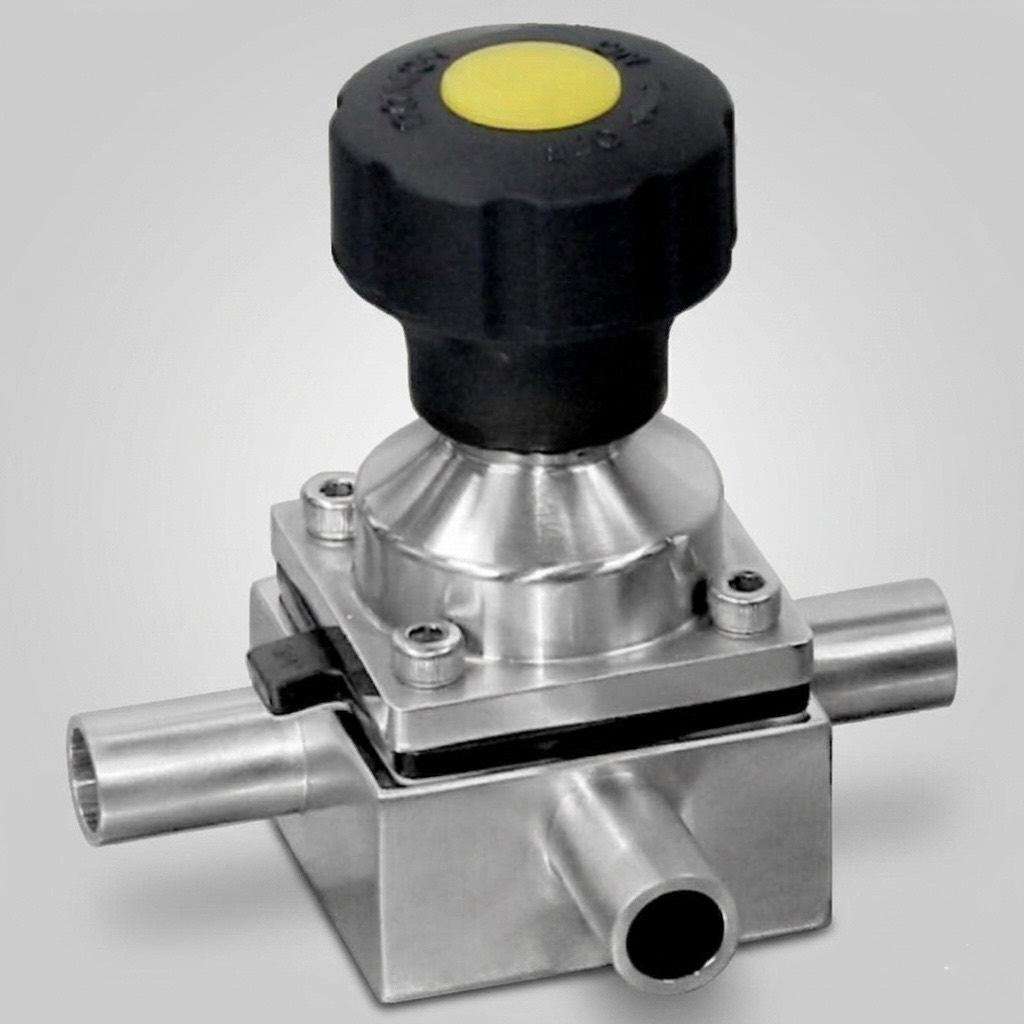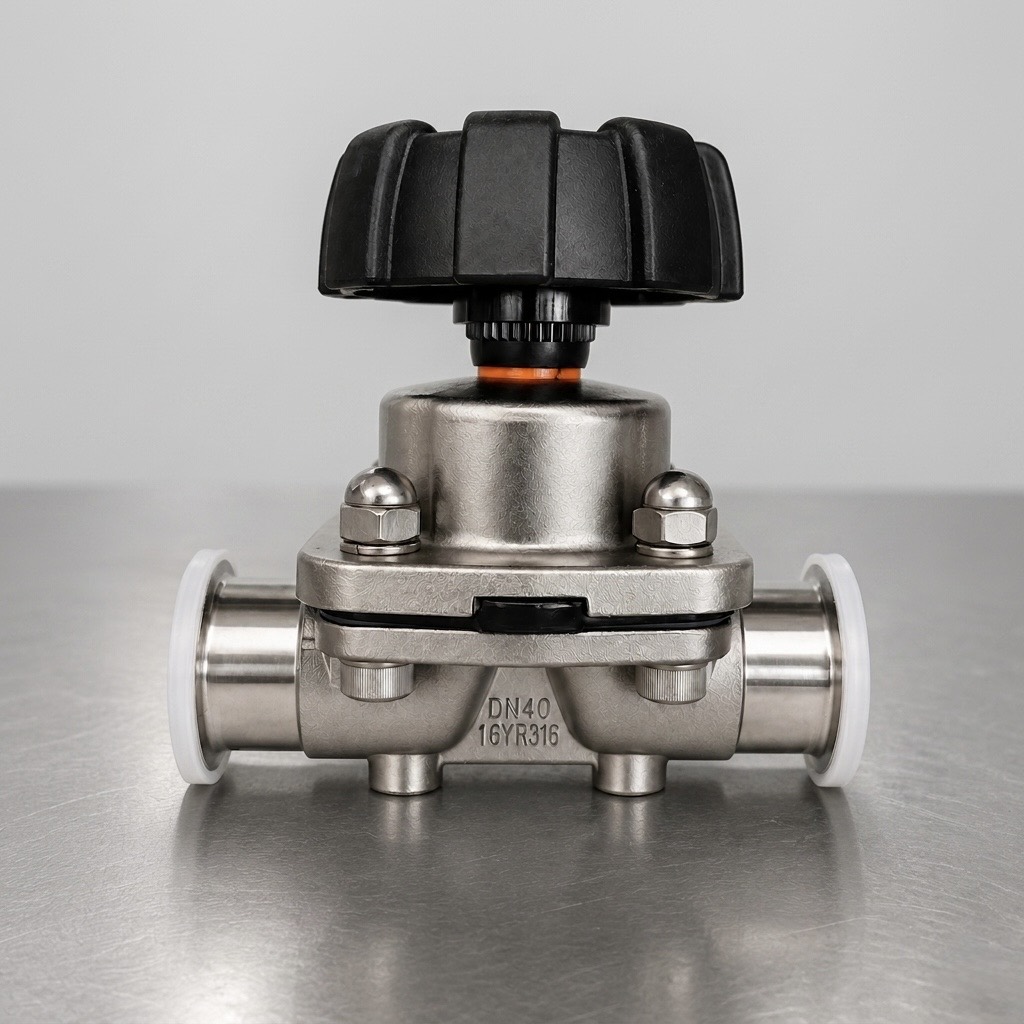
High-Purity Lines
Isolation and control where cleanability and documentation matter.
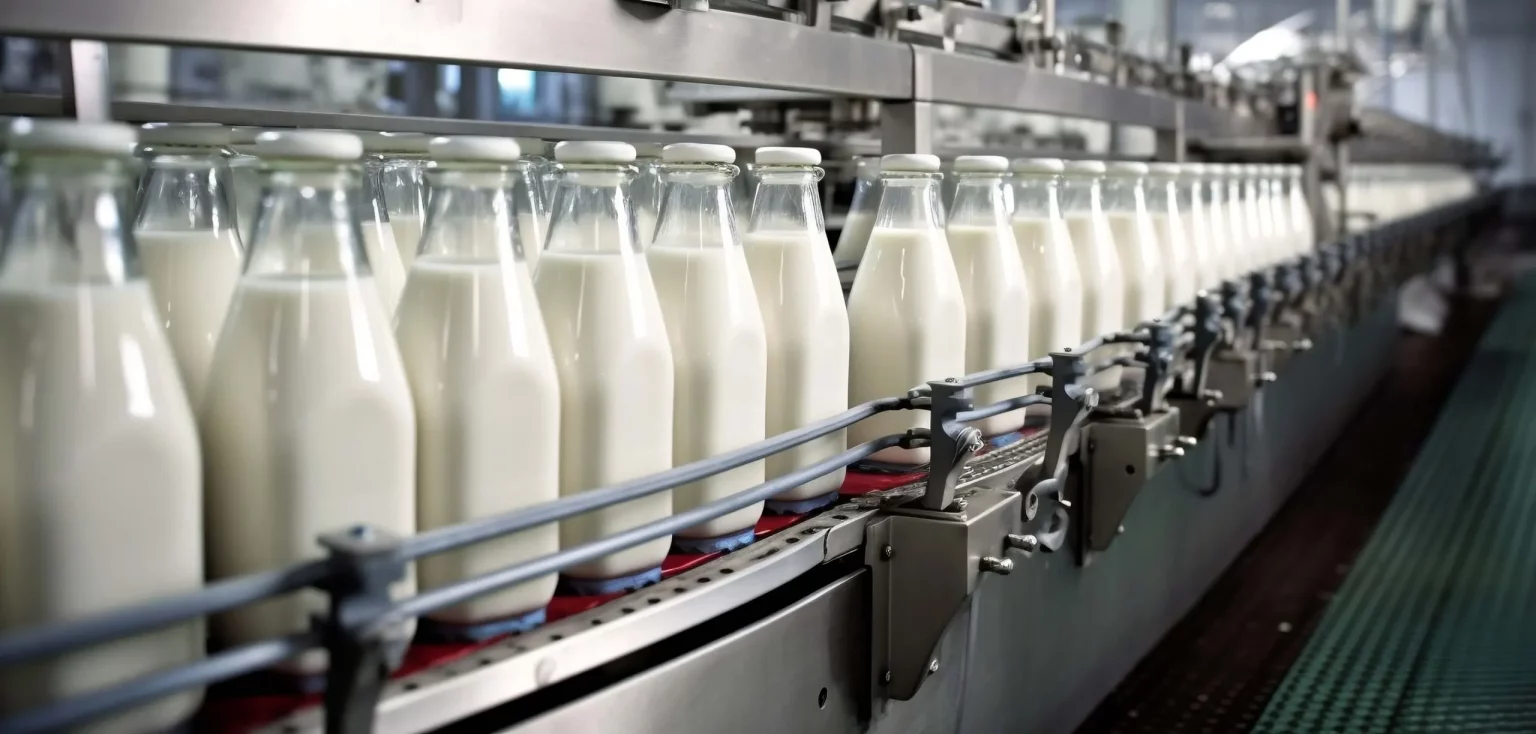
Dairy ProcessingPasteurizers, CIP systems, transfer lines
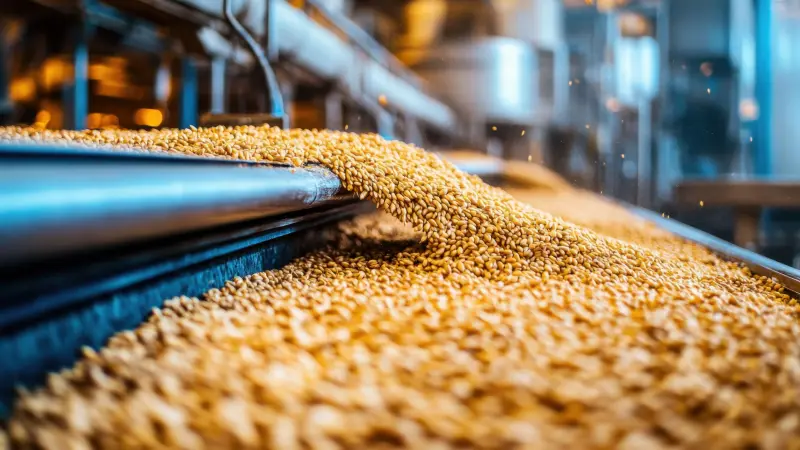
Food ProcessingSanitary fittings, valves and tubing
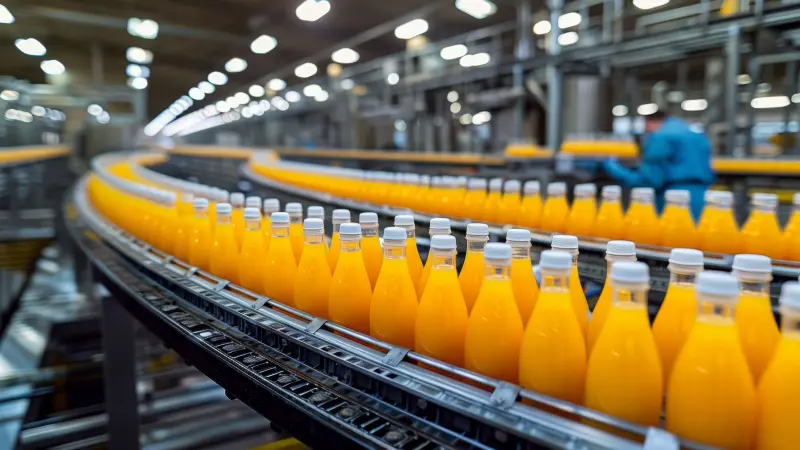
Beverage LinesBottling, mixing and hygienic transfer
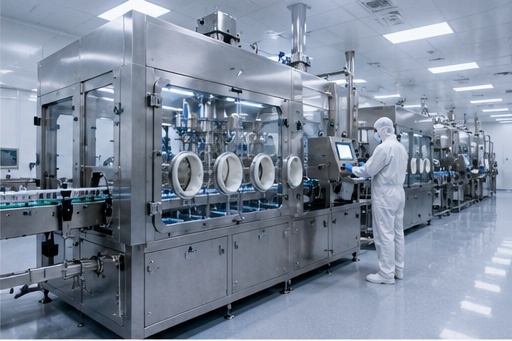
PharmaceuticalHigh-purity 316L and documentation
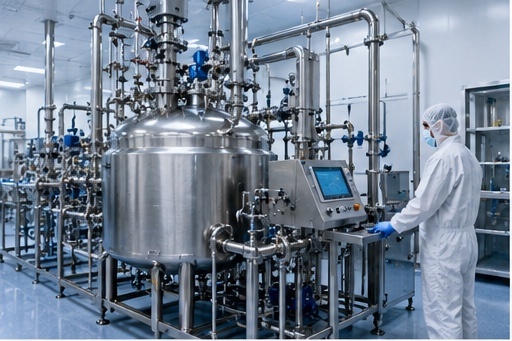
BiotechnologyBioreactors, skids and cell culture support
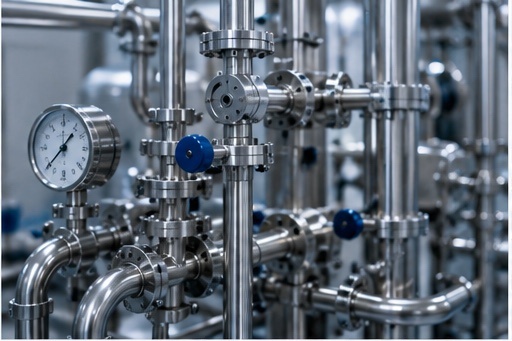
OEM / ContractorsProject RFQ support and secondary supply
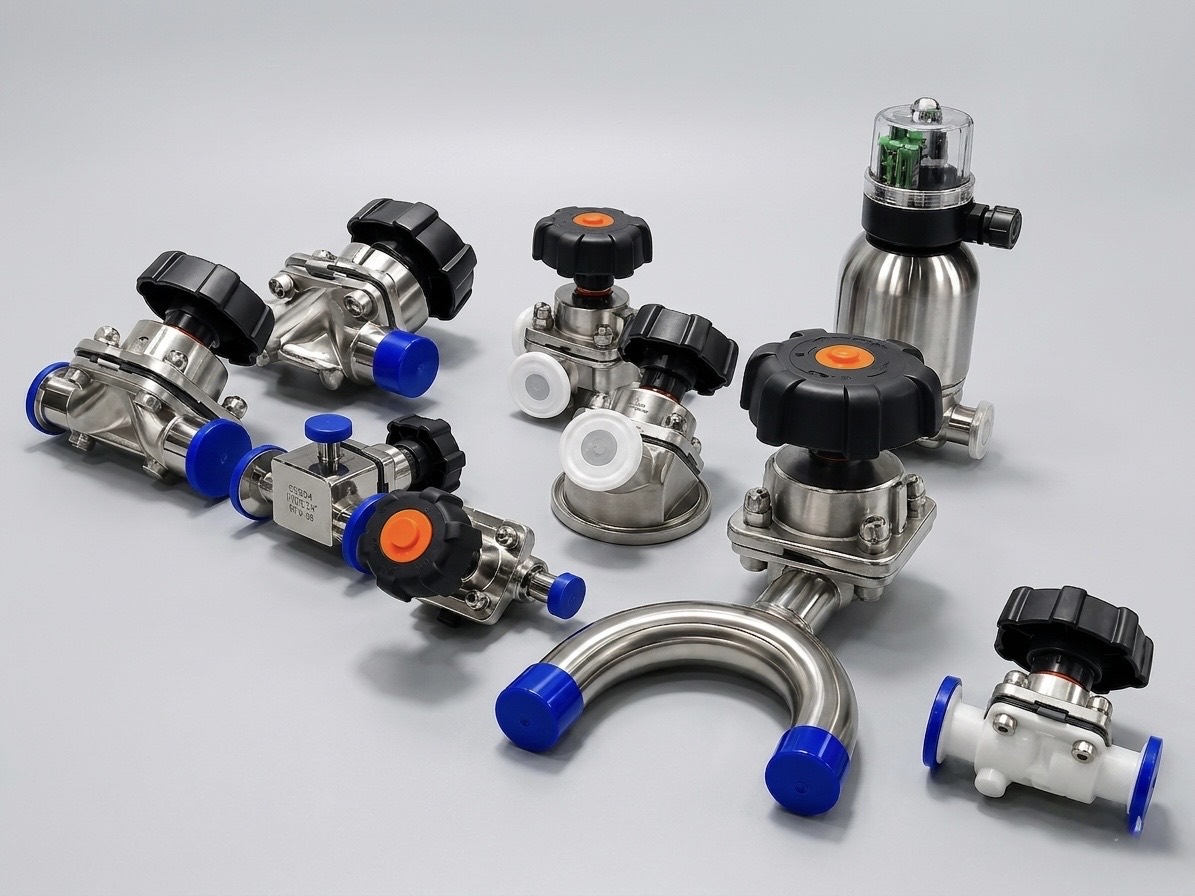
Sanitary Valve System
Diaphragm valves are specified for hygienic and high-purity applications where cleanability, isolation and documentation requirements are important.
Applications
Diaphragm valves are often used in pharmaceutical, biotech, clean utility and sensitive hygienic process environments.
Isolation and control where cleanability and documentation matter.
Commonly requested for process skids and clean utility connections.
Used where hygienic design and product isolation are important.
Sizes & Dimensions
Forged and machined bodies in DN8 through DN100. Two-port and tank-bottom configurations with full-bore drainability.
| Nominal | DN | OD (mm) | Face-to-Face | Cv | Body Style | Weight (kg) |
|---|---|---|---|---|---|---|
| ¼" | DN8 | 12.7 | 70 | 4 | Forged | 0.4 |
| ½" | DN15 | 12.7 | 70 | 8 | Forged | 0.6 |
| ¾" | DN20 | 19.05 | 90 | 14 | Forged | 0.9 |
| 1" | DN25 | 25.4 | 108 | 24 | Forged | 1.4 |
| 1½" | DN40 | 38.1 | 125 | 52 | Forged | 2.3 |
| 2" | DN50 | 50.8 | 150 | 88 | Forged | 3.5 |
| 2½" | DN65 | 63.5 | 180 | 140 | Cast | 5.2 |
| 3" | DN80 | 76.2 | 210 | 210 | Cast | 7.8 |
| 4" | DN100 | 101.6 | 260 | 380 | Cast | 12.5 |
Operating Conditions
Diaphragm material determines temperature and pressure capability. EPDM is standard; PTFE-faced for high-temp.
Actual ratings depend on size, material and operating conditions. Confirm via RFQ for project-specific requirements.
Standards & Compliance
Full documentation packages available including MTR, 3.1 certificates, surface roughness reports and pressure test records.
Sanitary equipment for milk and milk products processing.
Surface finish, materials and design for pharma/biotech.
European hygienic engineering and design certification.
Food contact materials compliance for seats and seals.
USP biological reactivity testing for plastics.
Material specification for 304/316L bodies.
Dimensional standard for tri-clamp fittings.
Standardized actuator mounting for automation.
Product Variants
Multiple variants available to match your application requirements. Browse related products for complete process line coverage.

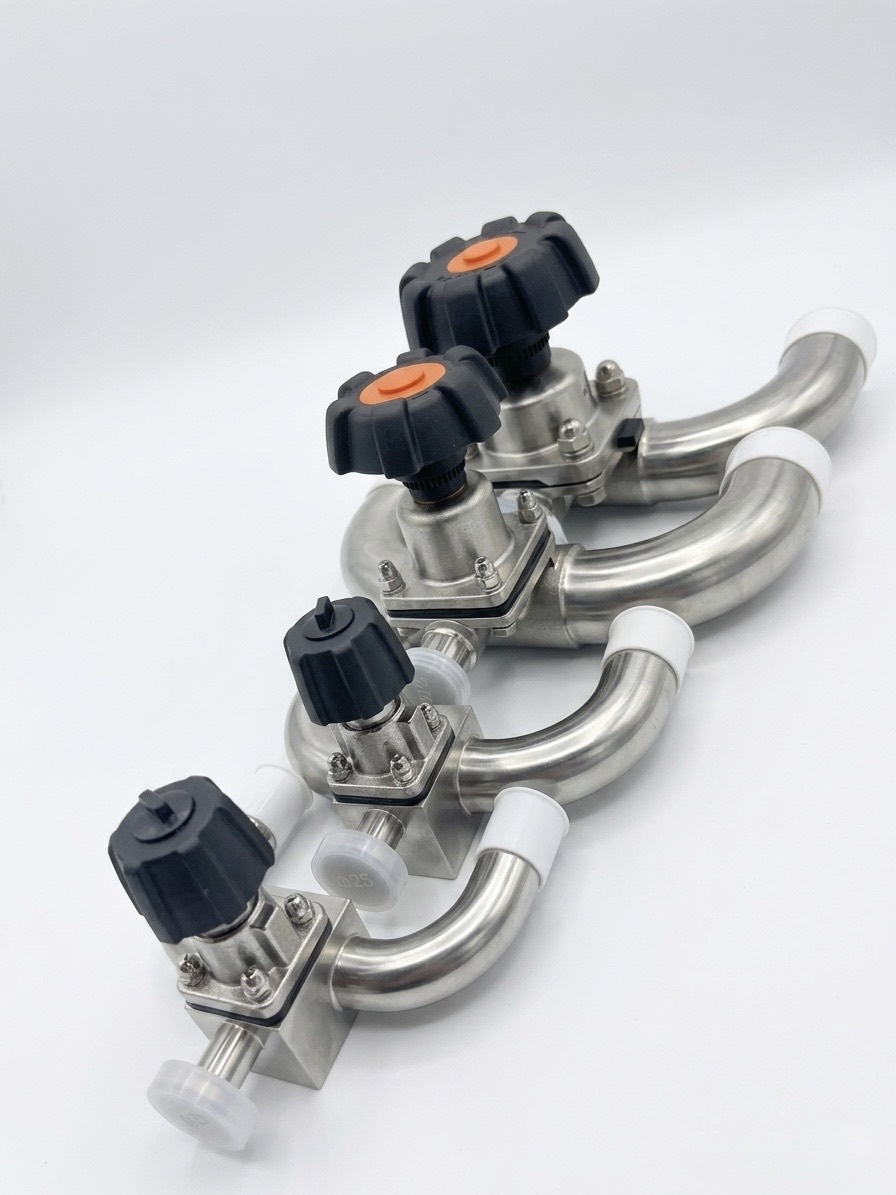
Hand-wheel operated for manual isolation in clean utility and product lines.
Request quote →
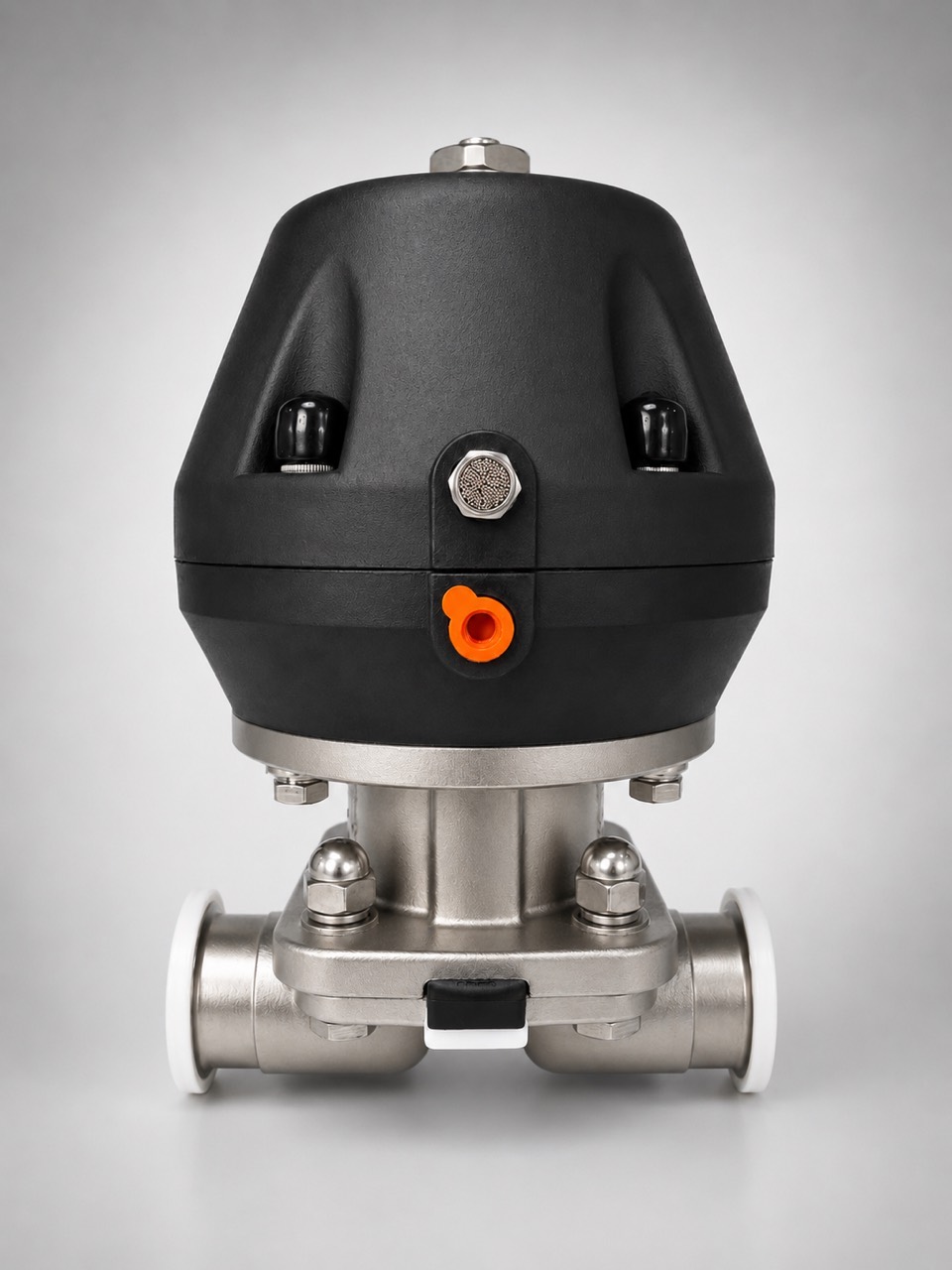
Air-actuated for automated process control with position feedback options.
Open page →
Flush-mount for tank drainage with minimal dead-leg in vessel applications.
Request quote →
Manifold blocks with multiple integrated diaphragm valves for compact systems.
Request quote →Materials & Standards
Clarify material, diaphragm, connection, operation and documentation before quotation.
Stainless material grade should be defined by project requirement.
High-purity and sanitary design references by RFQ.
Documentation expectations can be included in the RFQ package.
Technical Overview
Final selection should be reviewed against service media, cleaning method and process requirements.
| Requirement | Typical Information Needed |
|---|---|
| Valve Type | Sanitary diaphragm valve |
| Material Grade | 316L or 304 stainless steel by RFQ |
| Connection Type | Tri-clamp, weld end or project-specific connection |
| Diaphragm | EPDM, PTFE or other material by service condition |
| Operation | Manual, pneumatic or electric actuation |
| Documentation | MTR/MTC, certificates, inspection or finish requirements |
Include valve size, body type, diaphragm material, connection, actuator requirement, quantity and documentation expectations.
Use this page to prepare a clear sourcing request for repeat components, project packages, secondary supplier comparisons or plant maintenance requirements.
Common Questions
Engineering and procurement questions we hear most often. For project-specific guidance, send your application details via RFQ.
Diaphragm valves offer crevice-free, fully drainable design with no internal cavity for product trapping. They are the standard for ASME BPE pharmaceutical and biotech applications.
Ball valves have ball cavity behind the seats that can trap product. For aseptic, WFI and high-purity service, diaphragm valves provide superior cleanability per ASME BPE.
Standard EPDM diaphragms last 50,000+ cycles in normal service. Replace based on cycle count, visible wear, or as preventive maintenance every 6–12 months.
PTFE-faced diaphragms last longer but are more expensive. For steam SIP service, replace every 3–6 months due to thermal cycling stress.
EPDM diaphragms: –40°C to +130°C continuous. PTFE-faced two-piece: –29°C to +180°C continuous, suitable for +135°C steam SIP cycles.
For continuous high temperature above 130°C, specify PTFE-faced two-piece diaphragms. The PTFE face contacts the media while EPDM backing provides sealing action.
Forged bodies (DN8–DN50) offer superior surface finish and consistency. Cast bodies (DN65 and larger) are more economical at large sizes but may have surface variation.
Both are suitable for ASME BPE applications when properly finished. Electropolished cast bodies meet SF4 (Ra ≤ 0.38 μm) requirements.
Yes — diaphragm valves are well-suited for slurries, particulates and viscous media because the diaphragm wipes clean during operation with no cavity to trap solids.
Avoid sharp particulates that could damage the diaphragm. For abrasive media, specify thicker PTFE-faced diaphragms and consider reduced cycle frequency.
Weir-type has an internal weir that the diaphragm closes against. Straight-through (full-bore) has no weir for unobstructed flow — better for slurries.
Weir-type provides better flow control characteristics. Straight-through is preferred for particulates but has limited size availability.
Standard: 3.1 MTR, FDA compliance for diaphragm, pressure test certificate. Optional: ASME BPE surface finish report, USP Class VI biocompatibility, full traceability.
For validated pharmaceutical applications, request the full BPE documentation package including ferrite content and helium leak test results.
Use structured technical information to prepare clearer RFQs, reduce revision cycles and align sourcing requirements before quotation.
Send valve size, connection, diaphragm material, actuation, quantity and documentation needs.
Download the product datasheet for technical specifications, dimensional references, material data, applicable standards and RFQ guidance. Suitable for procurement, engineering review and project documentation.